
tests & DemonstrationsIranian Regime Infighting Khamenei’s Expanding Crackdown Reflects Deepening Fear of Revolt and Regime Collapse
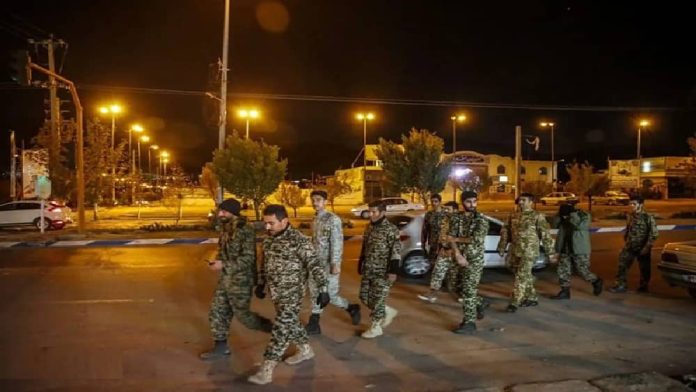
Basij paramilitary forces patrol the streets at night amid heightened security crackdowns across Iranian cities – July 2025
Written by
Farid Mahoutchi
As Iran confronts mounting domestic unrest and growing international isolation, the regime’s supreme leader Ali Khamenei has overseen an escalating crackdown that now reaches beyond street protesters and into the regime’s own political ranks. A pattern emerging across state-linked reporting and confirmed arrests suggests a leadership acting out of acute fear and despair.
Legitimacy Crisis
Warnings from state-aligned commentators indicate that upcoming local council elections risk historically low participation. Political commentator Mohammad Mohajeri said assessments point to participation “even below 10%,” arguing that the result would be councils that are “representative of only a limited few percent” — even “two or three percent” — of society.
State-linked media have also reflected mounting anxiety, repeatedly warning that unrest is “fire under the ashes” and cannot be ignored, while cautioning that unresolved grievances can re-emerge as social, economic, and even security crises.
Khamenei's desperate call for elite endorsement after #Iran's bloody crackdown exposes regime fractures: silence from insiders, prolonged internet blackout, and fear of ongoing resistance. Analysis by @HakamianMahmoud https://t.co/0zxnoeYkvY
— NCRI-FAC (@iran_policy) January 23, 2026
Elite Alarm: Uprising Framed as Overthrow, Not Reform
A former Iranian ambassador, speaking on state television’s “Khabar” channel, described recent protests as a revolt aimed at “overthrowing the system.” The wording underscores the regime’s internal assessment: this is no longer treated as a narrow economic grievance or manageable “reformist dissent,” but as a direct challenge to the Supreme Leader’s rule.
Simultaneously, reports of severe factional tensions within parliament portray a governing body marked by infighting, procedural coercion, and public discredit. One lawmaker, quoted in reporting, complained: “Why do we deliver these big lies to the people?” while invoking Khamenei’s demand for “unity” and warning about those “who want the country to fall apart.”
NCRI Editorial: Why #Iran’s Protests Are Different This Timehttps://t.co/yebCth9jtQ
— NCRI-FAC (@iran_policy) January 14, 2026
Crackdown Turns Inward
Perhaps the clearest indicator of insecurity is the widening repression against figures long considered within the regime’s political ecosystem. State-linked media reported a “new wave” of arrests targeting so-called reformist activists, including Azar Mansouri, Ebrahim Asgharzadeh, and Mohsen Aminzadeh. The IRGC-affiliated Fars News Agency confirmed the detentions, saying they were carried out by “security and judicial bodies.” Separate reporting citing Fars described a “joint operation” by IRGC Intelligence and the Ministry of Intelligence.
Fars also publicly justified the arrests with sweeping political-security accusations, alleging acts such as “targeting national cohesion,” “coordinating with enemy propaganda,” and creating “hidden overthrow mechanisms”—language that signals deep fear of organized political rupture inside the regime’s own camp.
By targeting historical conformists and insiders, Khamenei signals a shrinking tolerance even for controlled dissent. The crackdown is no longer selective; it is defensive consolidation.
Khamenei Pulls Strings in Coordinated Crackdown as #Iran’s Revisionist Faction Refuses to Yieldhttps://t.co/KPbDxjMj8L
— NCRI-FAC (@iran_policy) August 27, 2025
Media Tone Signals Institutional Fear
A compilation of regime media coverage reveals repeated references to instability, internal division, and social unrest. The emphasis on warnings, “sedition” framing, and “fire under the ashes” language reflects an establishment bracing for escalation.
When state-affiliated outlets repeatedly warn that protests and grievances can trigger renewed, high-cost crises, it suggests official recognition of vulnerability — and fear that the next eruption could be harder to contain.
The regime is simultaneously confronting acute economic strain and external pressure. On state television, Hossein Samsami, a sitting lawmaker said unpaid non-oil export currency commitments have risen to “about $85 billion,” adding that the exchange rate has surged from “70” to “130–140” (tomans, as stated), while prices for many goods have jumped “30 to 50 percent.” On the international front, senior officials have doubled down on the nuclear standoff, with remarks reported from parliamentary proceedings that “zero enrichment” will not be accepted — a posture that sustains Iran’s isolation and sanctions exposure.
The widening scope of repression suggests not strength, but fear — specifically fear of a population that has moved beyond episodic protest toward open rejection of the governing system.
In 1981, following a bloody crackdown on a peaceful protest on July 20, then Supreme Leader Ruhollah Khomeini started a nationwide terror campaign by cracking down on every group and every individual that opposed his rule. He used the excuse of a war with Iraq and a foreign enemy to justify crimes beyond comprehension. It appears Khamenei, faced with what even regime-linked voices describe as an “overthrow” threat, is following the same playbook. But this time, the regime is more fractured, dissent is more organized and widespread, and Iranian society is more outraged than at any time in its contemporary history.
tests & DemonstrationsIranian Regime Infighting
Khamenei’s Expanding Crackdown Reflects Deepening Fear of Revolt and Regime Collapse
Written by
Farid Mahoutchi
9th February 2026
Basij paramilitary forces patrol the streets at night amid heightened security crackdowns across Iranian cities – July 2025
Basij paramilitary forces patrol the streets at night amid heightened security crackdowns across Iranian cities – July 2025
Three-minute read
As Iran confronts mounting domestic unrest and growing international isolation, the regime’s supreme leader Ali Khamenei has overseen an escalating crackdown that now reaches beyond street protesters and into the regime’s own political ranks. A pattern emerging across state-linked reporting and confirmed arrests suggests a leadership acting out of acute fear and despair.
Legitimacy Crisis
Warnings from state-aligned commentators indicate that upcoming local council elections risk historically low participation. Political commentator Mohammad Mohajeri said assessments point to participation “even below 10%,” arguing that the result would be councils that are “representative of only a limited few percent” — even “two or three percent” — of society.
State-linked media have also reflected mounting anxiety, repeatedly warning that unrest is “fire under the ashes” and cannot be ignored, while cautioning that unresolved grievances can re-emerge as social, economic, and even security crises.
Elite Alarm: Uprising Framed as Overthrow, Not Reform
A former Iranian ambassador, speaking on state television’s “Khabar” channel, described recent protests as a revolt aimed at “overthrowing the system.” The wording underscores the regime’s internal assessment: this is no longer treated as a narrow economic grievance or manageable “reformist dissent,” but as a direct challenge to the Supreme Leader’s rule.
Simultaneously, reports of severe factional tensions within parliament portray a governing body marked by infighting, procedural coercion, and public discredit. One lawmaker, quoted in reporting, complained: “Why do we deliver these big lies to the people?” while invoking Khamenei’s demand for “unity” and warning about those “who want the country to fall apart.”
Crackdown Turns Inward
Perhaps the clearest indicator of insecurity is the widening repression against figures long considered within the regime’s political ecosystem. State-linked media reported a “new wave” of arrests targeting so-called reformist activists, including Azar Mansouri, Ebrahim Asgharzadeh, and Mohsen Aminzadeh. The IRGC-affiliated Fars News Agency confirmed the detentions, saying they were carried out by “security and judicial bodies.” Separate reporting citing Fars described a “joint operation” by IRGC Intelligence and the Ministry of Intelligence.
Fars also publicly justified the arrests with sweeping political-security accusations, alleging acts such as “targeting national cohesion,” “coordinating with enemy propaganda,” and creating “hidden overthrow mechanisms”—language that signals deep fear of organized political rupture inside the regime’s own camp.
By targeting historical conformists and insiders, Khamenei signals a shrinking tolerance even for controlled dissent. The crackdown is no longer selective; it is defensive consolidation.
Media Tone Signals Institutional Fear
A compilation of regime media coverage reveals repeated references to instability, internal division, and social unrest. The emphasis on warnings, “sedition” framing, and “fire under the ashes” language reflects an establishment bracing for escalation.
When state-affiliated outlets repeatedly warn that protests and grievances can trigger renewed, high-cost crises, it suggests official recognition of vulnerability — and fear that the next eruption could be harder to contain.
The regime is simultaneously confronting acute economic strain and external pressure. On state television, Hossein Samsami, a sitting lawmaker said unpaid non-oil export currency commitments have risen to “about $85 billion,” adding that the exchange rate has surged from “70” to “130–140” (tomans, as stated), while prices for many goods have jumped “30 to 50 percent.” On the international front, senior officials have doubled down on the nuclear standoff, with remarks reported from parliamentary proceedings that “zero enrichment” will not be accepted — a posture that sustains Iran’s isolation and sanctions exposure.
The widening scope of repression suggests not strength, but fear — specifically fear of a population that has moved beyond episodic protest toward open rejection of the governing system.
In 1981, following a bloody crackdown on a peaceful protest on July 20, then Supreme Leader Ruhollah Khomeini started a nationwide terror campaign by cracking down on every group and every individual that opposed his rule. He used the excuse of a war with Iraq and a foreign enemy to justify crimes beyond comprehension. It appears Khamenei, faced with what even regime-linked voices describe as an “overthrow” threat, is following the same playbook. But this time, the regime is more fractured, dissent is more organized and widespread, and Iranian society is more outraged than at any time in its contemporary history.