
Mashhad Students Turn Memorial into Protest as Regime Leaders Warn of Collapse
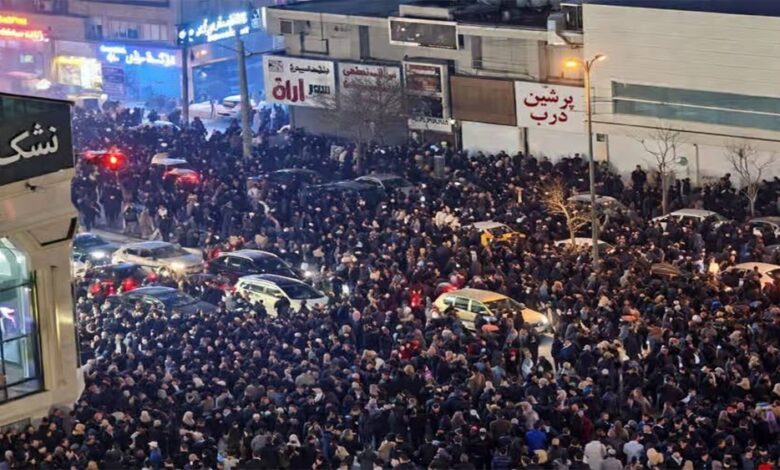
Iran Protests – January 2026
Written by
Mansoureh Galestan
Despite severe repression and ongoing internet blackouts aimed at concealing the scale of state violence, the spirit of the Iranian uprising remains unbroken. On Tuesday, February 3, 2026, students at the Mashhad University of Medical Sciences defied security measures to honor a fallen classmate, while high-ranking regime officials issued stark warnings about the system’s fragile survival.
Students Honor “Withered Flower” of the Uprising
On Tuesday, students in Mashhad gathered to hold a memorial for Faezeh Hossein-Nejad, a midwifery student who entered the university in 2023. Hossein-Nejad was killed by security forces during the January uprising.
The memorial quickly evolved into a protest rally. Students chanted, “The student dies but accepts no humiliation,” rejecting the regime’s intimidation tactics. Describing their slain classmate, they chanted, “This withered flower is a gift to the homeland,” transforming a mourning ceremony into a direct challenge to the authority of the regime’s guards on campus.
Global Condemnation: Australia Sanctions the Killers
As students stood their ground inside Iran, the international community moved to penalize the perpetrators of the crackdown. On February 3, Australian Foreign Minister Penny Wong announced targeted sanctions against 20 individuals and three entities linked to the Islamic Revolutionary Guard Corps (IRGC).
The Australian government’s statement was explicit regarding the severity of the situation, noting that since December 28, 2025, the regime has “massacred thousands of Iranians” while arresting countless others. Canberra also condemned the regime’s use of “nationwide internet and telecommunications blackouts” designed to hide these atrocities from the world.
Regime Officials Admit to “Historical Turn” and Fear of Collapse
While the streets remain restless, fear has visibly permeated the upper echelons of the regime. Speaking at the grave of Ruhollah Khomeini on February 3, Parliament Speaker Mohammad Baqer Ghalibaf admitted the regime is facing a “historical turn.”
In a speech laced with anxiety, Qalibaf warned that “fear and surrender” would incur heavy costs. Utilizing a metaphor for internal collapse, he stated that while “stone-throwing from the outside” is manageable, the real danger lies in the “destruction of the rails”—an admission of deep internal fractures and the erosion of the system’s foundation. He urged for greater obedience to Khamenei, signaling a crisis of authority.
Simultaneously, Ali Shamkhani, an advisor to Khamenei, told Al-Mayadeen that while the military regards war as inevitable, there is still hope to “prevent a catastrophe.” Shamkhani’s tone appeared to seek an off-ramp, stating that if international proposals are “free of threats,” the regime might avoid a “disaster,” further highlighting the mullahs’ desperation to ensure their survival.