
Iran Uprising Day 4: Protesters Storm Governorate in Fasa as Nationwide Bazaar Strikes Paralyze Regime’s Economy
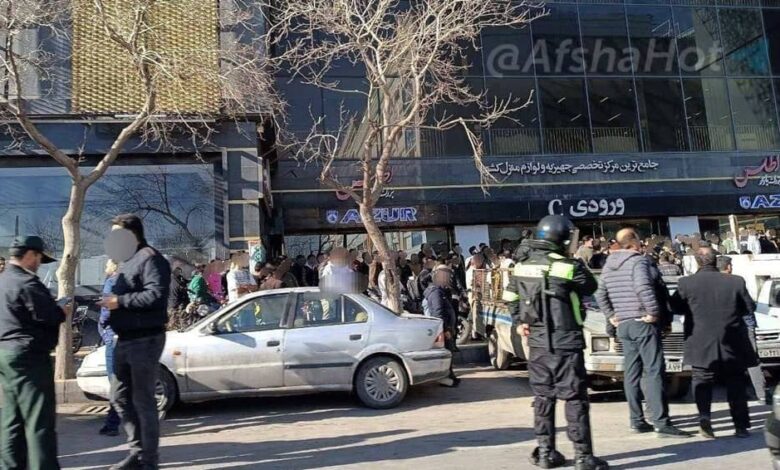
Popular protests in front of the Atlas bazaar in Mashhad, northeastern Iran, on December 31, 2025
Written by
Mansoureh Galestan
On December 31, 2025, the fourth consecutive day of nationwide unrest in Iran, the confrontation between the public and the clerical regime escalated sharply. What began earlier in the week as a series of strikes by bazaar merchants protesting the collapsing currency and economic mismanagement has morphed into a volatile political uprising. While major commercial hubs in Tehran, Isfahan, and Kermanshah remained shuttered in an unprecedented show of defiance, the southern city of Fasa became a flashpoint for direct conflict, with protesters storming government buildings despite live fire from security forces.
Iran Protests Day 4: Strikes and Demonstrations Continue, Protesters Clash with Security Forces
Escalation and Defiance in Fasa
The most intense clashes of the day occurred in Fasa, Fars province. Defying a heavy security presence, a large crowd gathered outside the governorate building. Footage from the scene indicates that the situation rapidly deteriorated as security forces opened fire on the unarmed demonstrators. Despite the crackdown and the deployment of military helicopters circling the city to instill fear, protesters refused to disperse.
December 31—Fasa, southern Iran
On the 4th day of widespread protests across Iran, youth in Fasa held intense protests in front of the governorate building, clashing with security forces.#IranProtests pic.twitter.com/66qmhC2cYn— People's Mojahedin Organization of Iran (PMOI/MEK) (@Mojahedineng) December 31, 2025
In a significant breach of the regime’s authority, demonstrators managed to break down the doors of the Fasa governorate and enter the compound. Reports indicate that security forces, despite being heavily armed, were forced to retreat in several areas due to the intensity of the public’s anger. While the state-run Mehr News Agency quickly issued a denial regarding casualties—claiming the situation was “managed” and reports of deaths were “baseless”—sources on the ground report injuries from shootings. The regime’s denial follows a standard pattern of obfuscation used during the 2019 and 2022 uprisings to cover up lethal force.
December 31—Fasa, southern Iran
Security forces open fire on unarmed protesters who had gathered in front of the governorate.#IranProtests pic.twitter.com/77XsIIfD5k— People's Mojahedin Organization of Iran (PMOI/MEK) (@Mojahedineng) December 31, 2025
The Bazaars: An Economic Referendum
While Fasa burned, the economic heart of the country remained in cardiac arrest. In Tehran, the Grand Bazaar—historically a pillar of Iranian politics—was transformed into a militarized zone. Security forces flooded the “Hammam-Chal” and “Cheragh Bargh” districts, preventing pedestrians from standing in groups. Despite threats of arrest and the sealing of passageways, merchants kept their shutters down.
The strikes are not merely a pause in business but a calculated sacrifice. One merchant in Tehran’s Parsian market noted that shopkeepers facing rents of 150 to 250 million tomans are accepting daily losses of 10 to 15 million Tomans to maintain the strike. “This is real protest,” the report stated. “It isn’t just one or two shops; the entire market is standing firm.”
December 31—Tehran, Iran
Protesters in Lalehzar chant “Neither Gaza nor Lebanon, my life is for Iran” as demonstrations continue to spread across the capital for fourth day.#IranProtests pic.twitter.com/dptHbhqUHT— People's Mojahedin Organization of Iran (PMOI/MEK) (@Mojahedineng) December 31, 2025
The strikes were total in several major cities. In Kermanshah, security forces lined the 8-kilometer stretch from Ferdowsi Square to the Garage, yet the gold market and major arcades remained closed. In Isfahan, the mobile phone market and shops around Meydan-e Imam joined the strike. Similar shutdowns were reported in Tabriz, Shiraz, Genaveh, and Hamadan. In Qeshm’s Dargahan market, merchants summarized the collective sentiment: “This is not life. We have worked for years, but today we cannot continue. There is no future left for the youth.”
Political Slogans and National Unity
The trajectory of the slogans indicates that economic grievances have acted as a catalyst for long-standing political rage. In Kermanshah, protesters were heard chanting, “No Gaza, No Lebanon, My Life for Iran,” directly challenging the regime’s costly foreign interventions. Another slogan, “Death to the oppressor, be it the Shah or the Leader [Khamenei],” underscored the public’s rejection of all forms of dictatorship.
December 31—Hamadan, western Iran
People took to the streets and clashed with repressive security forces. Residents voiced anger over injustice and demanded accountability as economic conditions continue to worsen.
Protesters chanted "Down with the dictator" and "Down with… pic.twitter.com/nSx0feWgBe— People's Mojahedin Organization of Iran (PMOI/MEK) (@Mojahedineng) December 31, 2025
The uprising has also fostered cross-sector solidarity. In Shirvan, teachers and retirees rallied outside the Department of Education, joining the “national uprising.” In Izeh, the mother of executed political prisoner Mojahed Kourkour joined the protests, serving as a potent symbol linking the current unrest to the bloody crackdowns of previous years. Even in Isfahan, a lone woman was filmed shouting “Death to the tyrant” in the city center, sparking further crowds to gather.
Regime Panic: From Drills to Desperate Appointments
The regime’s response has been a mix of brute force and desperate administrative maneuvering. In a clear sign of apprehension regarding student involvement, major universities in Tehran, including Beheshti and Allameh Tabataba’i, abruptly announced a shift to “non-in-person” classes until the end of the term. While officials cited “cold weather” and “energy shortages,” student organizations view this as a pretext to empty campuses and prevent student gatherings.
December 31—Dorud, western Iran
The people of Dorud join nationwide protests with chants of "Down with the dictator" and "Down with Khamenei"#IranProtests pic.twitter.com/hRwpuhbtS4— People's Mojahedin Organization of Iran (PMOI/MEK) (@Mojahedineng) December 31, 2025
Simultaneously, Supreme Leader Ali Khamenei appointed Brigadier General Ahmad Vahidi as the Deputy Commander of the IRGC. Vahidi, a former commander of the Quds Force and a wanted fugitive by Interpol for his role in the AMIA bombing in Argentina, is known for his brutal approach to dissent. This appointment signals the regime’s intent to rely on its most hardline elements to crush the uprising.
Furthermore, the judiciary and the Basij have issued threats. The Attorney General warned of “decisive action” against those “disrupting security,” while the Basij announced “neighborhood-centered drills” scheduled to run from January 3 through April, a transparent attempt to maintain a paramilitary presence on the streets.
December 31—Nahavand, western Iran
Protesters chant: "We don't want the Islamic Republic"#IranProtests pic.twitter.com/rjL5wCS1GW— People's Mojahedin Organization of Iran (PMOI/MEK) (@Mojahedineng) December 31, 2025
As the sun set on the fourth day of the uprising, the mood on the Iranian street was one of resolve rather than fear. From the shattered doors of the Fasa governorate to the silent, shuttered rows of the Tehran Bazaar, the message is uniform. The government spokesperson’s claims of “dialogue” are being met with tear gas in the bazaar and bullets in Fasa. As one report from Hamadan noted, “Trash cans were removed so they wouldn’t be burned, but if the police act savagely, we will bring a calamity upon them.” The wall of fear appears to be crumbling, and the people are signaling that the era of silence is over.