
MOIS’ Communiqué Reveals Its Dread of PMOI’s Resistance Units inside Iran
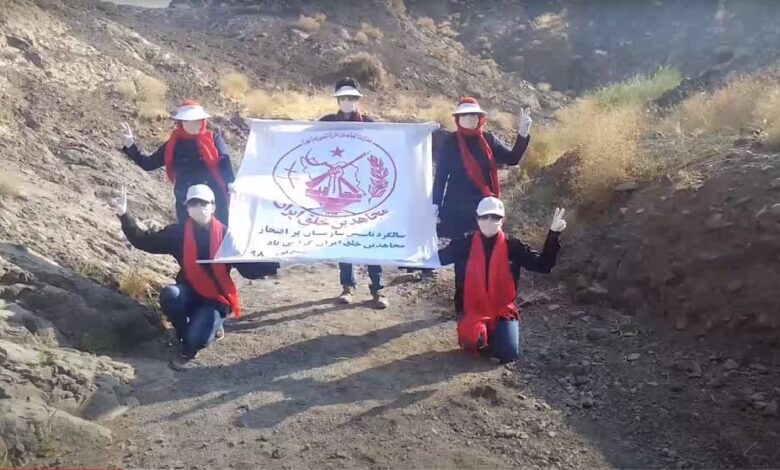
PMOI-led Resistance Units inside Iran pose for a photo- September 2022
Written by
Mohammad Sadat Khansari
In the aftermath of the 12-day war, the Iranian regime’s Ministry of Intelligence and Security (MOIS) released a lengthy statement attempting to reframe military and political defeat as strategic brilliance. Beneath its claims of victory, the document betrays what Tehran truly fears: the growing presence and potential of the People’s Mojahedin Organization of Iran (PMOI) and its Resistance Units inside the country.
The statement, titled a “declarative communiqué on the silent battle with the intelligence NATO during the 12-day imposed war,” seeks to portray the regime as besieged by an entire Western intelligence alliance. Yet the passages of greatest concern to MOIS are not about foreign adversaries; they are about domestic resistance.
MOIS alleges that the enemy tried to “activate outlaws, various terrorists in different disguises… bring to the scene the monarchist remnants, thugs and hooligans, and the PMOI’s Resistance Units and dormant cells to inflame dissatisfaction and labor protests and turn the situation into rampant street riots.” It further claims that during the war, security forces “struck multiple operational PMOI cells active in Tehran, West Azerbaijan, Sistan and Baluchestan, Qazvin, Hormozgan, and other provinces.”
How the #Iranian Regime’s Fear of the Uprising and @Mojahedineng Signals Its Imminent Downfallhttps://t.co/qvvUKqH5p0
— NCRI-FAC (@iran_policy) July 18, 2025
This is no small admission. For years, Tehran has insisted that organized opposition inside the country is marginal or externally fabricated. Yet MOIS’ own communiqué confirms that PMOI-linked Resistance Units are embedded across multiple provinces, active enough to worry a ministry supposedly focused on external threats during wartime.
The contradictions are even sharper when MOIS tries to sound triumphant. It claims that under “the resolute leadership of the Commander-in-Chief,” all enemies were “crippled and subdued,” and that adversaries “could not carry out even a single operation against the country’s security.” Yet the same document details extensive counter-operations, dozens of arrests across major provinces, and allegedly foiled assassination plots against 23 senior officials. If nothing got through, why the sweeping dragnet?
MOIS ends by bowing to the Supreme Leader’s “greatness” and praising citizens for helping hunt “suspicious cases,” urging them to continue informing on neighbors. “When we asked for assistance and reports of suspicious activities, the people played the main role,” the statement says, adding: “We sincerely beg that this vigilance continues.” A regime that claims absolute control does not publicly beg for mass surveillance by ordinary citizens—it reveals shortages of trust, reach, and confidence in its own apparatus.
#Iran's Regime Admits Its Fear of #MEKResistanceUnits https://t.co/nmvFCsE6sx
— NCRI-FAC (@iran_policy) July 6, 2025
The MOIS communiqué also brims with grandiose but unverifiable claims of offensive intelligence triumphs—“penetrating the innermost layers” of Israel’s military, stealing “super-secret nuclear archives,” launching “unprecedented cyber operations.” These boastful lines read less like fact and more like political anesthesia for a shaken security elite. The only tangible, repeatedly named target is domestic: the PMOI’s Resistance Units.
Read as a whole, MOIS has painted a revealing picture:
Acknowledging what it denies in public: PMOI Resistance Units are active nationwide, not an exiled relic.
Contradicting its own narrative of total control: A claimed “zero breach” alongside widespread arrests signals vulnerability, not strength.
Fear of ideas, not just actions: The rush to criminalize news and the plea for citizen informants show panic over PMOI’s ability to transform public anger into organized action.
Survival depends on repression: The regime enriches only its machinery of surveillance and executions—not its promised science, economy, or legitimacy.
Iran regime executes PMOI supporters Behrouz Ehsani and Mehdi Hassani in a desperate act of terror https://t.co/ShkBfxR5Mv
— People's Mojahedin Organization of Iran (PMOI/MEK) (@Mojahedineng) July 27, 2025
MOIS wanted to project omniscience and omnipotence. Instead, its statement reads as a confession: despite decades of repression, the PMOI remains an embedded, organized, and growing force inside Iran’s cities and provinces. And Tehran’s powerful intelligence arm is telling its own leadership—and the world—that this is the threat that keeps them awake at night.
MOIS’ Communiqué Reveals Its Dread of PMOI’s Resistance Units inside Iran