
‘No to Execution Tuesdays’ Enters Its 76th Week with Widespread Prison Protests in Iran
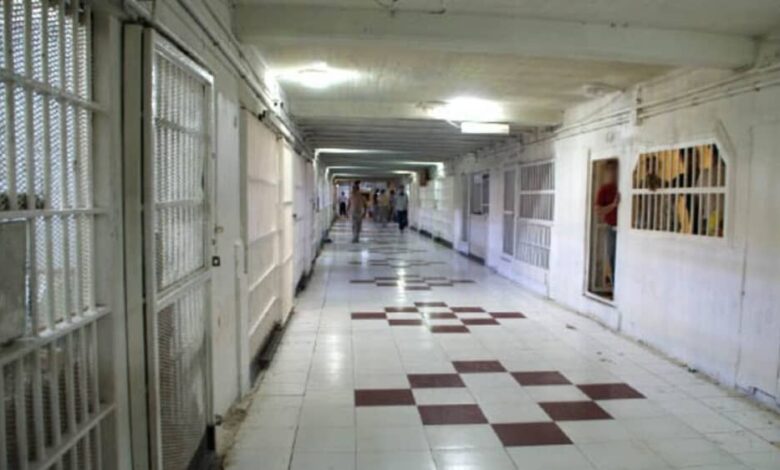
Inside view of Adel Abad Prison, located in Shiraz, southern Iran
Written by
Mansoureh Galestan
The “No to Execution Tuesdays” campaign marked its 76th consecutive week of resistance today, as political and ordinary prisoners across 47 Iranian detention centers joined a coordinated hunger strike. Launched to protest the regime’s systematic use of the death penalty and brutal repression, the campaign continues to grow in both scope and significance amid a surge in executions and political violence.
This week’s statement opens with a tribute to the victims of the July 1999 student uprising—an event widely seen as the genesis of modern mass protests in Iran. Despite its violent suppression, the uprising laid the groundwork for later waves of resistance, including the protests of 2009 and the nationwide uprisings of 2017, 2019, and 2022.
“Let us not be intimidated; let us defend the right to life of our fellow citizens,” the statement declared, emphasizing a shared struggle for freedom and self-determination that has transcended generations.
Today marks the 76th week of the #NoDeathPenaltyTuesdays campaign, with prisoners in 47 prisons on hunger strike against Iran’s execution machine.
As the statement says: “In just the past 10 days, the government has executed at least 24 people, without holding a public and fair… pic.twitter.com/oBRmkPPQ01— IRAN HRM (@IranHrm) July 8, 2025
Execution Surge Signals Regime Crackdown
The campaign’s statement highlights the alarming pace of executions in recent weeks. Since the beginning of Tir (June 22, 2025), at least 24 individuals have been executed. The total number of executions in the Iranian calendar year 1404 (starting March 21, 2025) has now reached 428—figures that underscore the regime’s escalating use of capital punishment as a tool of fear and control.
The wave of executions coincides with other acts of state violence. In Hamedan, security forces shot and killed two young men, while in the village of Gunich near Khash, two women were fatally attacked in what activists described as a state-linked assault. These incidents reflect the regime’s deep-rooted misogyny and intensifying campaign to quash dissent by all means.
On July 4, 2025, Ms. Mai Sato, the United Nations Special Rapporteur on human rights in Iran, issued a stark warning. She warned that the Iranian regime is using regional conflict as a pretext to repress ethnic and religious minorities and political dissidents. Emphasizing the regime’s systematic violations of international law, Ms. Sato called for urgent global action to protect the rights and lives of all Iranian citizens.
Press release: Post-conflict situations must not be used as an opportunity to increase repression against ethnic and religious minorities or suppress dissent. I am alarmed by reports of executions, mass arrests, particularly against of minorities, notwithstanding the impact of…
— Mai Sato (@drmaisato.bsky.social) (@drmaisato) July 4, 2025
Kurdish Political Prisoners Sentenced to Death
The campaign also condemned the sentencing of five Kurdish political prisoners—Rezgar Beigzadeh Babamiri, Pejman Soltani, Sooran Ghasemi, Kaveh Salehi, and Teyfour Salimi Babamiri—who were arrested during the 2022 uprising. The five men now face a combined total of twelve death sentences, issued without due process or fair trials.
“These inhumane sentences are a clear violation of fundamental rights and demonstrate the regime’s desperation to crush any form of organized dissent,” the statement said.
The campaign renewed its call for international solidarity with dual-national prisoners at risk of execution, especially Swedish-Iranian academic Ahmadreza Djalali. Abducted by security forces on the night of the Evin Prison bombing and imprisoned under harrowing conditions for years, Djalali now faces imminent execution under what the statement describes as a “medieval sentence.”
The campaign urged civil society, human rights organizations, and concerned individuals around the world to raise their voices and resist the regime’s strategy of intimidation.
Urgent Action – Hundreds of prisoners, including those arbitrarily detained from Evin prison, are being subjected to cruel and inhumane conditions. They were moved to overcrowded prisons after Israeli air strikes destroyed parts of Evin prison on 23 June.https://t.co/UqlJSNqMHU pic.twitter.com/Gld7PVBeDX
— Amnesty Iran (@AmnestyIran) July 8, 2025
Human Rights Demands and Prison Conditions
Campaign members also called for intensified international efforts to monitor and expose prison conditions. Testimonies from political prisoners recently exiled to Greater Tehran and Qarchak Prison have shed light on inhumane treatment and widespread rights violations. If this is the condition in the capital’s prisons, the situation in remote and less-visible facilities is likely far worse, especially for lesser-known detainees.
The campaign’s central demand remains unchanged: the immediate abolition of the death penalty in Iran.
“We firmly believe that the people of Iran, in solidarity with other oppressed nations, will continue this path of resistance and perseverance until victory and liberation are achieved,” the statement concluded.
New information confirms that 25-year-old Arghavan Fallahi, along with three other political prisoners, Bijan Kazemi, Amirhossein Akbari Monfared, and Mohammad Akbari Monfared is being severely tortured to extract forced confessions regarding the alleged assassination of two… pic.twitter.com/irXWHxAafj
— IRAN HRM (@IranHrm) July 5, 2025
47 Prisons Join the 76th Week Hunger Strike
As of Tuesday, July 8, 2025, political prisoners across 47 facilities are participating in hunger strikes in support of the “No to Execution Tuesdays” campaign. These include major prisons such as Ghezel Hesar, Greater Tehran, Qarchak, and Adelabad, as well as numerous regional facilities spanning provinces from Kurdistan to Sistan and Baluchestan.
The full list of participating prisons reflects the growing nationwide reach of the campaign and the unity of prisoners standing against a regime that continues to wield the death penalty as a political weapon.
The “No to Execution Tuesdays” campaign has become one of the most sustained and symbolic acts of defiance against Iran’s use of capital punishment and broader repression. As the regime intensifies its crackdown, the voices from within its prison walls—echoing across the country—demand that the world listen and act.