
Iran Protests: November 17 Demonstrations Highlight Deepening Economic Woes
Written by
Mansoureh Galestan
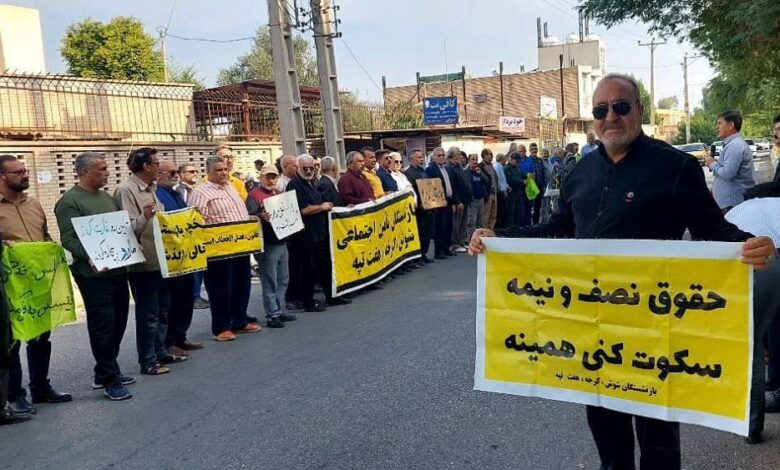
On Sunday, November 17, 2024, protests erupted across Iran as retirees, healthcare workers, and merchants staged demonstrations in multiple cities, demanding improved living conditions, higher wages, and an end to government mismanagement. These coordinated protests spanned several provinces and regions, underscoring the breadth of discontent among Iranians.
In Tehran, the capital, retirees from the oil sector rallied in front of the National Iranian Oil Company headquarters. Protesters chanted slogans such as “Until we get our rights, we won’t stay quiet” and decried the worsening economic conditions. Demonstrators highlighted the government’s failure to address their demands for adequate pensions and fair treatment.
In Ahvaz (Khuzestan Province, southwest Iran), retirees of the Social Security Organization resumed their protests, chanting, “Stop the warmongering; our tables are empty.” The demonstrators criticized the regime’s focus on regional conflicts instead of addressing their dire economic needs.
November 17—Isfahan, central Iran
Retirees of the steel industry hold protest rally, demanding higher pensions and better living conditions. Protesters chant, "You lying government, what happened to your promises?"#IranProtestspic.twitter.com/0JqMgUxTgo— People's Mojahedin Organization of Iran (PMOI/MEK) (@Mojahedineng) November 17, 2024
In Shush (Khuzestan Province, southwest Iran), Social Security pensioners also took to the streets, demanding higher pensions and better living conditions. Protesters called for the release of political prisoners while chanting slogans such as “Only on the streets will we win our rights.”
In Isfahan (Isfahan Province, central Iran), retirees from the steel industry rallied in front of the Steel Pension Fund’s offices. They demanded higher pensions and better living standards, chanting, “You lying government, what happened to your promises?” Protesters highlighted years of unfulfilled commitments from officials.
In Sirjan (Kerman Province, southern Iran), metal merchants held a rally after the government abruptly increased sales tolls and shuttered several shops. Merchants protested the harsh measures, which they say have devastated their livelihoods.
November 17—Shiraz, southern Iran
Medical emergency employees rally to protest poor working conditions and unpair wage-setting and tariff policies.#IranProtests pic.twitter.com/JyTH6iWFJD— People's Mojahedin Organization of Iran (PMOI/MEK) (@Mojahedineng) November 17, 2024
In Zahedan (Sistan and Baluchestan Province, southeast Iran), public transportation drivers rallied in front of the governorate, protesting the deactivation of their fuel cards. Drivers stated that their cards had been blocked for over a month without explanation, despite repeated appeals for resolution. They noted that local officials had promised action last week, but no steps have been taken to address their demands, further exacerbating their frustration.
In Yasuj (Kohgiluyeh and Boyer-Ahmad Province, southwest Iran), medical sector employees rallied to protest low wages and poor living conditions. Demonstrators called for meaningful wage adjustments and improved working conditions, particularly in light of inflation and economic instability.
In Shiraz (Fars Province, southern Iran), medical emergency personnel staged a protest in front of the governorate to highlight poor working conditions, unfair wage-setting policies, and flawed tariff structures. The Coordination Council of Nurses has outlined demands for wage adjustments, inflation-matching bonuses, and job security for healthcare workers.
November 17—Shush, southwest Iran
Pensioners of the Social Security Organization hold protest rally, reiterating their demands for higher pensions and better living conditions.
Protests also call for the release of political prisoners.#IranProtestspic.twitter.com/7ICVuLq3El— People's Mojahedin Organization of Iran (PMOI/MEK) (@Mojahedineng) November 17, 2024
The protests reflect a broader pattern of economic dissatisfaction across Iran. From retirees to healthcare workers and merchants, diverse sectors of society have taken to the streets, exposing the regime’s inability to address systemic issues. Despite repeated promises, the economic plight of ordinary Iranians continues to worsen, fueling a surge in protests nationwide.
These demonstrations signal mounting pressure on the regime to address the worsening living conditions, growing inflation, and widespread grievances of its population.