
Iran’s Economic Collapse: Clerical Regime’s Mismanagement Fuels Poverty, Inflation, and Unrest
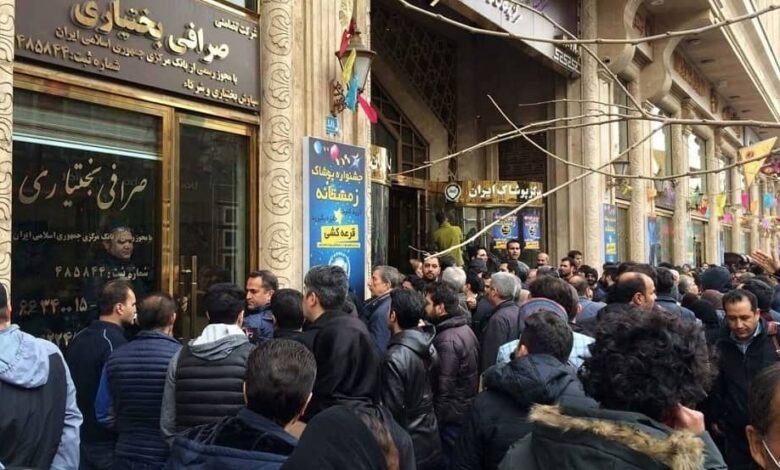
iran money exchange economy
Written by
Mansoureh Galestan
Iran’s economic decline under the clerical regime has accelerated, driven by rampant corruption, mismanagement, and policies that disproportionately harm the population. Despite promises of reform, recent developments under the newly appointed president, Masoud Pezeshkian, have only intensified public frustration.
Pezeshkian, who took office two months ago, initially came up with a slew of promises, yet by the end of the second month, it became clear that his administration was continuing on the same destructive path as his predecessor, Ebrahim Raisi. According to state media reports, critical sectors of the economy have seen unprecedented price hikes, with basic necessities becoming unaffordable for many. For instance:
Bread prices surged by up to 200%.
The cost of water and housing has also skyrocketed.
Adding to the widespread economic misery, the demolition of makeshift homes belonging to the urban poor on the outskirts of cities continues unabated, exacerbating homelessness and insecurity for vulnerable communities.
Confrontations between municipal authorities and street vendors, who are simply trying to make a living, have also intensified, as the regime clamps down on any form of informal economic activity.
The regime’s relentless push to increase fuel prices is becoming clearer, with near-constant policy shifts aimed at preparing the population for a sharp hike.
Inflation and rising costs are pushing more and more Iranians into poverty, with little hope for relief as the government remains focused on oppressive measures rather than meaningful reforms.
Economic mismanagement has left rice farmers in northern Iran facing financial ruin, as the government continues importing foreign rice, leaving locally produced rice unsold and wasted.
Tehran’s overcrowded streets have also become a point of contention.
The police reported that over 9 million vehicles and motorcycles need to be regulated, hinting at a possible move toward extracting more taxes from already struggling citizens.
Amid Budget Shortfall in #Iran, #Pezeshkian Government Prioritizes Gas Price Hike Over Security Expenditureshttps://t.co/MEzoIUDB75
— NCRI-FAC (@iran_policy) October 1, 2024
The economic crisis is most starkly reflected in Iran’s staggering inflation rate, which has spiraled out of control as the regime continues to print money. Official statistics reveal that Iran’s misery index reached 49.1% in 2023, compared to just 19.3% in 2016. This nearly 30% rise in the index highlights the increasing hardship faced by the Iranian people, with more citizens falling below the poverty line.
The lack of wage alignment with inflation has exacerbated inequality. Despite widespread protests and demands for better pay, the regime failed to implement wage any change, leaving workers unable to cope with the soaring cost of living. Coupled with a continuous rise in liquidity, it is evident that the regime’s economic policies are fueling inflation, worsening the financial crisis for ordinary Iranians.
The Iranian economy operates under an unusual model where a third sector, dominated by entities like the Islamic Revolutionary Guard Corps (IRGC) and various foundations linked to Supreme Leader Khamenei, wields enormous economic power. These organizations, such as Execution of Imam Khomeini’s Order (EIKO) and the Astan Quds Razavi, enjoy tax exemptions, control vast national resources, and operate without accountability. This third sector essentially functions outside the regular economy, leading to the failure of privatization efforts. Privatization, meant to shrink the bloated government sector, has instead empowered quasi-state entities that monopolize key industries while avoiding oversight.
Even state media, such as Fars News, acknowledge privatization has backfired, with large public assets sold to banks and public organizations rather than genuine private companies. This consolidation of wealth in the hands of a few entities has deepened Iran’s economic inequality and widened the gap between the regime elite and the impoverished majority.
#Pezeshkian Follows in Raisi’s Footsteps toward #Iran’s Economic Collapsehttps://t.co/7omE4z7wtB
— NCRI-FAC (@iran_policy) September 4, 2024
The regime’s inability to address rampant poverty is evident across all sectors. In 21 provinces, the misery index exceeds the national average, reflecting regional disparities and worsening economic conditions. Despite numerous promises from Pezeshkian’s administration, substantial reforms remain elusive. Notably, the regime failed to address the critical issue of rising fuel prices, which disproportionately affects lower-income Iranians. In a recent controversial move, Pezeshkian reduced the fuel quota by 10 liters per fill-up, sparking public outrage.
A report from the state-run Fararu website highlights confusion and dissatisfaction over this fuel rationing. The report suggests that the government is pushing citizens towards using unsubsidized fuel, which would further burden households already grappling with economic hardship.
As economic discontent grows, so does the regime’s reliance on repression to maintain control. Ahmadreza Radan, the head of the State Security Forces, announced that 18,000 body cameras will be added to police forces by the end of the year, and 150 heavy motorcycles have been purchased for security forces, underscoring the regime’s growing fear of civil unrest. The regime has also increased its crackdown on dissent, with a renewed focus on mandatory hijab laws through the presence of “morality police” and hijab patrols near universities.
In conclusion, Iran’s clerical regime continues to steer the country towards economic ruin. Despite decades of promises, reforms remain superficial, and the economy is still entrenched in corruption, inefficiency, and systemic inequality. As the regime tightens its grip on power through repression, the Iranian people endure increasing hardship, reaching a breaking point where desperation grows. This escalating frustration fuels a growing mass of citizens, poised for any spark that could ignite widespread unrest.