

The Release of Assadollah Assadi: Europe’s Dangerous Gamble With Tehran’s State Terrorism
Written by
Mahmoud Hakamian
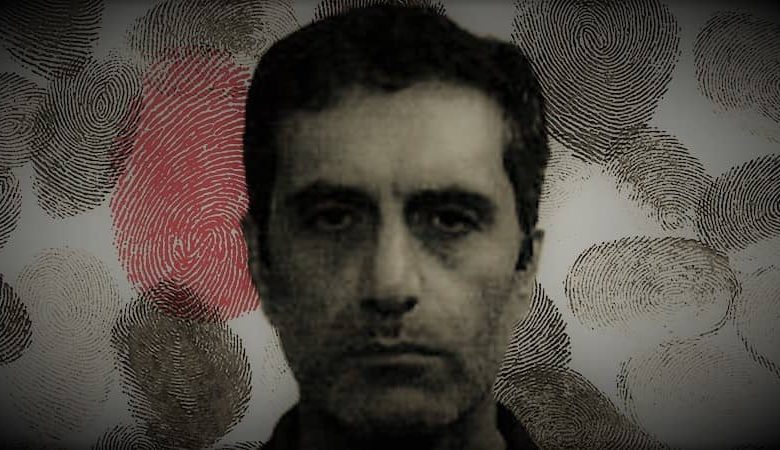
In a recent development, the Omani government disclosed its role in facilitating a prisoner exchange between Belgium and Iran’s regime. However, the release of Assadollah Assadi, a convicted terrorist diplomat from Tehran, drew strong condemnation from the Iranian opposition coalition, the National Council of Resistance of Iran (NCRI).
Before this incident, the Belgian Constitutional Court had issued a mandate requiring Brussels to inform the victims before extraditing the convict to Iran, granting them the opportunity to seek legal recourse. Shockingly, Assadi was released without notifying the victims, blatantly disregarding their rights and violating the court order.
Assadi faced conviction for masterminding and spearheading a terrorist attack aimed at an NCRI rally near Paris in 2018. Regarded as one of the most significant terror attempts on European soil, the incident left leaders and security experts around the world pondering how far Tehran is willing to cross the line.
This has not been the first time that an Iranian operative is caught red-handed but later exchanged as a Western government—in Assadi’s case, Belgium—succumbed to the regime’s hostage-taking act.
Iran’s Terrorist-Diplomat, Assadollah Assadi, Led a Large Espionage & Terrorism Network in EU
Tehran’s involvement in staging terrorist attacks or plotting major acts of terror spans multiple countries and continents. The regime’s embassies have played a key role in both organizing and facilitating these crimes, some of which include:
On July 13, 1989, a tragic incident occurred in Vienna, where Abdol Rahman Qassemlou, the leader of the Kurdistan Democratic Party of Iran, along with his aides Abdullah Qaderi-Azar, Fadel Mala, and Mahmoud Rassoul, was fatally shot during a meeting with envoys from the Iranian regime. Shockingly, the perpetrators were allowed to return to Iran shortly after the crime took place.
On April 24, 1990, a tragic event unfolded when Prof. Kazem Rajavi, the representative of the NCRI in Switzerland and elder brother of Massoud Rajavi, the leader of the Iranian Resistance, was assassinated in his car near Geneva in Coppet. Swiss authorities issued arrest warrants for at least 13 terrorists possessing Iranian service passports. In November 1992, two suspects, Mohsen Sharif Esfahani, and Ahmad Taheri, were apprehended in France. Subsequently, in February 1993, the Paris high court ordered the extradition of the two men to Switzerland. However, to the surprise of many, the French government covertly deported the suspects back to Iran.
On September 17, 1992, a horrific event unfolded at the Mykonos restaurant in Berlin, Germany, where Dr. Sadegh Sharafkandi, the leader of the KDPI, and his three Kurdish aides, Homayoun Ardalan, Fattah Abdollahi, and Nouri Dehkordi, were assassinated.
A forgotten lesson
Soon after Tehran assassinated Dr. Sadegh Sharafkandi and his associates, many European countries summoned their ambassadors from Iran and expelled many Iranian diplomats or agents from their soil. This seriously damaged the regime’s terrorist operation in Europe, hindering it from executing terrorist plots on European soil.
Shockingly, 15 years later, on December 10, 2007, Germany released and deported two of the masterminds behind the crime, including Kazem Darabi. Upon Darabi’s return to Tehran, he received a hero’s welcome and was granted a high-ranking position in the government.
The Western response has been inadequate, enabling the regime’s terror apparatus to execute its malicious agenda. Whether driven by electoral concerns, economic interests, or strategic misjudgment, appeasement has only empowered Tehran to persist in its extortion tactics for over four decades.
Western governments had a golden opportunity to dismantle the regime’s extensive network of terrorism and espionage in Europe when they apprehended Assadi with substantial evidence. His trial unveiled his role in managing a vast network of spies and terrorists throughout the continent. However, the identities of those spies remained undisclosed, and Assadi was ultimately released.
As his arrest was a major blow to the regime’s machinery of terrorism, Assadi’s release represents a disgraceful capitulation to terrorism and hostage-taking. Tehran will persist in its nefarious acts of terrorism and hostage diplomacy, utilizing its embassies as hubs for these activities. European countries must confront the clerical regime’s terrorism sooner rather than later. They had an opportunity but failed to seize it, and their reluctance to take decisive action may result in further loss of lives at the hands of the world’s foremost state-sponsor of terrorism.